

Is Night Driving Supposed to Feel This Way?

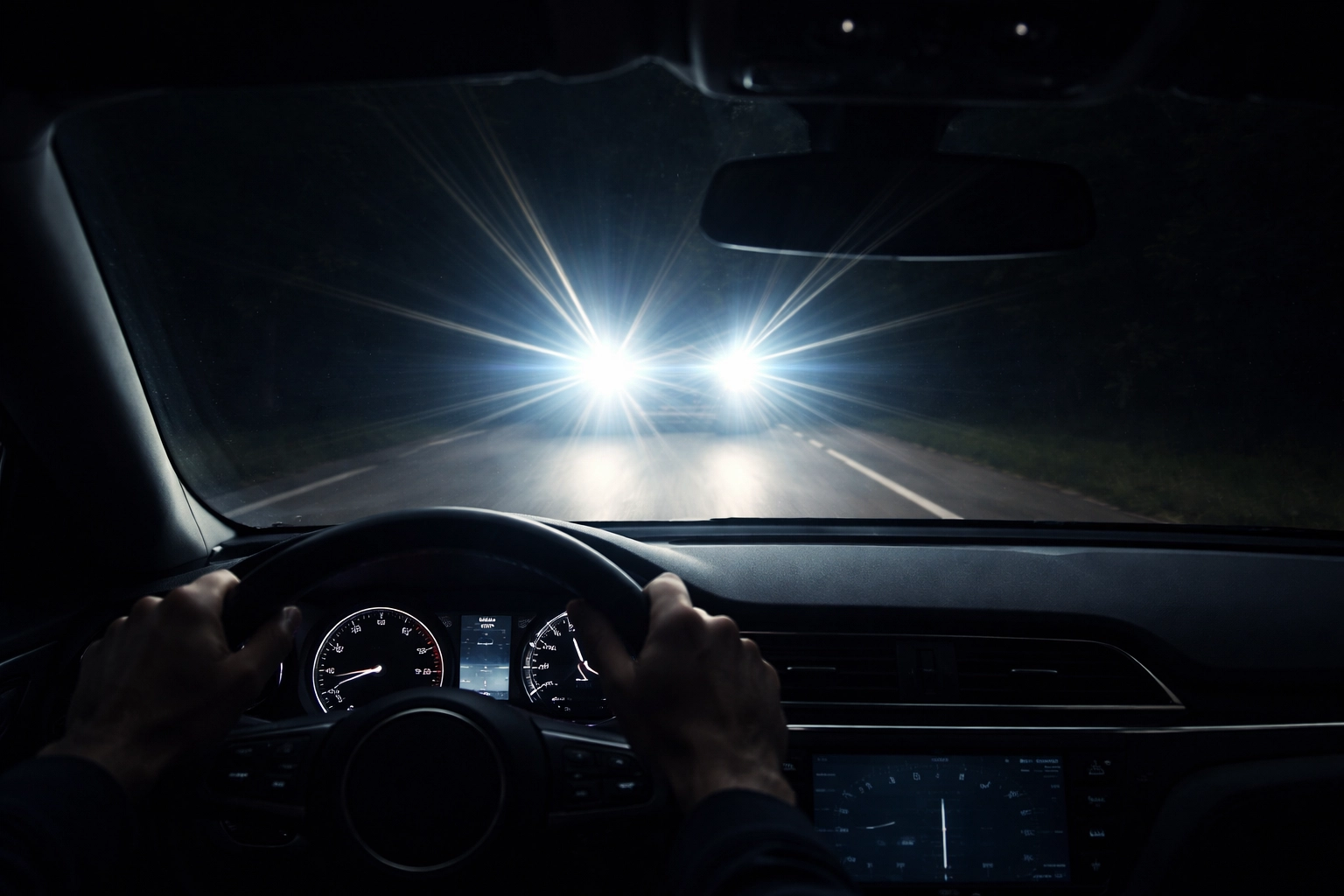
You had the surgery. The doctor said it was a success. So why does driving home after sunset feel like navigating through a fog of starbursts and halos?
If you've found yourself white-knuckling the steering wheel at night, squinting at oncoming headlights, or second-guessing whether that car is really as far away as it looks: you're not imagining things. And you're definitely not alone.
According to the American Academy of Ophthalmology, visual disturbances like halos, glare, and difficulty with depth perception are among the most common post-surgical complaints, particularly among patients who've undergone LASIK, cataract surgery, or monovision correction. Dr. Rachel Bishop, a clinical director at the National Eye Institute, notes that "many patients are surprised to learn that 'successful' surgery doesn't always mean perfect vision in every situation: especially in low-light conditions."
Let's break down what's really happening behind those headlights and, more importantly, what you can do about it.
Why Night Driving Feels Different After Eye Surgery
Here's the reality: night driving is demanding on your visual system even under the best circumstances. Dim lighting creates less contrast, colors become harder to distinguish, and your peripheral vision takes a hit. According to the National Highway Traffic Safety Administration, fatal crashes are three times more likely at night than during the day: and compromised vision plays a significant role.
Now add post-surgical changes to the mix.
After procedures like LASIK or cataract surgery, your cornea and lens have been physically altered. While this typically improves daytime vision dramatically, it can also introduce new optical phenomena:
- Halos: Rings of light that appear around headlights and streetlamps
- Glare: Intense brightness that seems to spread across your field of vision
- Starbursts: Rays or spikes emanating from light sources
- Reduced contrast sensitivity: Difficulty distinguishing objects in low-light environments
These symptoms often improve over time as your eyes heal: but for many patients, particularly those over 50, some degree of night vision difficulty may persist. Research from the Mayo Clinic indicates that patients over 50 may need twice as much light to see clearly compared to when they were 30.
The Monovision Factor: A Double-Edged Sword
If you've been corrected for monovision: where one eye is set for distance and the other for near vision: night driving presents an additional layer of complexity.
Dr. William Trattler, a corneal surgeon and spokesperson for the American Society of Cataract and Refractive Surgery, explains: "Monovision is an excellent solution for reducing dependence on reading glasses, but it does require the brain to adapt to processing two different images. In low-light conditions, this adaptation can be more challenging."
Here's what happens: during the day, your brain seamlessly blends the images from both eyes. But at night, when your pupils dilate to let in more light, optical imperfections become more pronounced. The eye set for distance may produce halos, while the near eye struggles to contribute meaningful depth information.
The result? Compromised depth perception that makes it harder to judge distances between vehicles, gauge closing speeds, and react appropriately to sudden changes in traffic.
Common complaints from monovision patients driving at night include:
- Difficulty judging how far away oncoming cars really are
- Increased glare sensitivity that lingers after a vehicle passes
- A "swimmy" or unstable feeling when shifting focus between the road and mirrors
- Eye fatigue that sets in faster than it used to
- Reduced confidence in highway driving or unfamiliar routes
If any of these sound familiar, take a breath. This doesn't mean your surgery failed: it means your visual system needs some targeted support.
When "Normal" Crosses Into "Needs Attention"
Not all night driving discomfort is created equal. Here's a quick reference to help you understand what's within the range of typical post-surgical adjustment versus what warrants a call to your eye care provider:
Within Normal Range:
- Mild halos around bright lights that don't obstruct your view
- Slight increase in glare sensitivity compared to before surgery
- Temporary difficulty adjusting between light and dark environments
- Gradual improvement over weeks to months
Worth a Professional Conversation:
- Halos or starbursts so intense they obscure your ability to see the road
- Persistent double vision or "ghost images"
- Temporary blindness or significant after-images following headlight exposure
- No improvement (or worsening) of symptoms after 3-6 months
- Any sudden change in vision quality
When in doubt, schedule a follow-up. Your surgeon or optometrist can assess whether additional healing time is needed or if a corrective solution might help.

The Solution You Didn't Know Existed: Driving Glasses for Monovision
Here's where things get exciting. You don't have to choose between the convenience of monovision and safe, comfortable night driving.
Monovision glasses for driving are specifically designed to address the unique challenges faced by post-surgical patients. Unlike standard glasses, these specialized lenses work with your monovision correction rather than against it.
At spare-specs, we've developed a collection of driving glasses for monovision that feature:
- Anti-reflective coatings that dramatically reduce glare and halos from oncoming headlights
- HD surfacing technology for sharper, more defined vision in low-contrast environments
- Distance optimization that temporarily equalizes both eyes for driving tasks
- Premium lens materials that minimize optical distortion
Think of it this way: your monovision correction is optimized for everyday life: reading menus, working on the computer, seeing across the room. Driving glasses for monovision are like a specialized tool for a specific job. You wouldn't use a butter knife to cut a steak, right?
What to Look for in Quality Monovision Driving Glasses
Not all eyewear is created equal. When shopping for driving glasses that will genuinely make a difference, keep these factors in mind:
DO look for:
- Anti-reflective (AR) coating specifically rated for night driving
- High-definition or digital surfacing for maximum clarity
- Frames with adequate coverage to minimize peripheral light intrusion
- A reputable optical provider who understands monovision prescriptions
DO NOT settle for:
- Generic "night driving" glasses with yellow tints (these can actually reduce visibility)
- Over-the-counter readers marketed as driving solutions
- Glasses without AR coating: they'll create more glare, not less
- One-size-fits-all solutions that don't account for your specific prescription
At spare-specs, we work directly with your prescription to create custom monovision distance glasses that address your unique visual needs. Because when it comes to driving safety, "close enough" isn't good enough.
Style Doesn't Have to Take a Back Seat
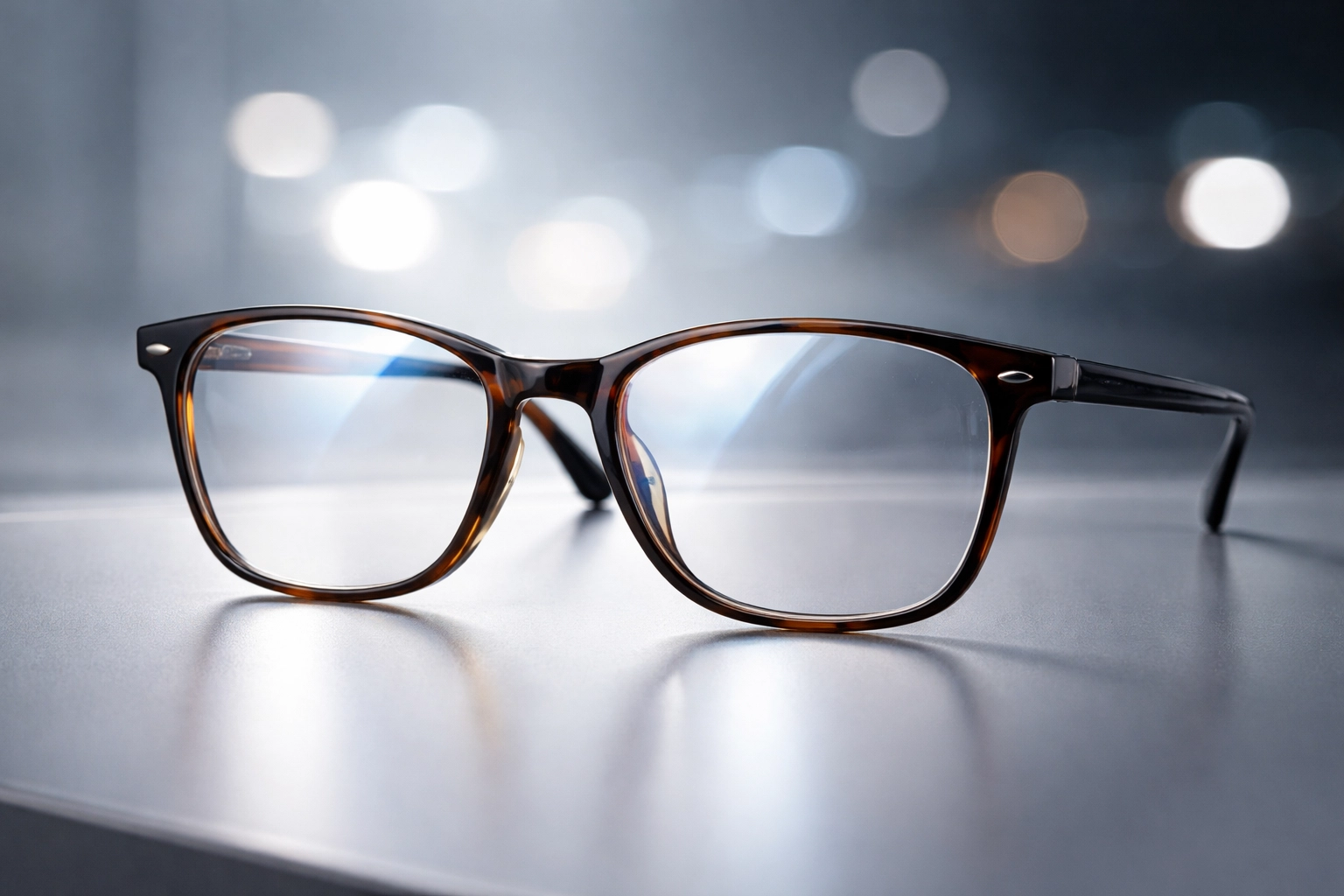
Let's be honest: you didn't go through eye surgery just to end up wearing clunky, clinical-looking glasses every time you get behind the wheel.
The good news? Function and fashion aren't mutually exclusive. Our collections feature premium optical frames from brands like Modern Optical and Visual Eyes Eyewear that look as good as they perform.
Whether you prefer sleek modern metals or bold statement frames, you can find driving glasses for monovision that complement your personal style while keeping you safe on the road.
Your Next Steps
If night driving has become a source of stress rather than freedom, here's what to do:
- Document your symptoms : Note when they're worst, what triggers them, and whether they're improving or stable
- Consult your eye care provider : Rule out any complications and discuss whether specialized glasses could help
- Explore monovision glasses for driving : Visit our monovision collection to see your options
- Invest in quality : Your vision: and your safety: are worth it
Night driving doesn't have to feel this way. With the right tools and a little expert guidance, you can reclaim the road after dark.
Popular Posts

Popular Posts