

2026 Lens Tech: It's not just a prescription, it's a lifestyle upgrade
Let's be honest, when was the last time you got excited about your eyeglasses? If you're like most people, you think of them as a necessity, not an upgrade. You get your prescription, pick a frame, and move on with your life.
But here's the thing: it's 2026, and lens technology has quietly revolutionized what your glasses can do for you.
According to Dr. Jennifer Lyerly, OD, an optometrist and spokesperson for the American Academy of Ophthalmology, "The advancements in lens technology over the past few years have been nothing short of remarkable. We're no longer just correcting vision, we're enhancing quality of life."
If you've been wearing the same basic lenses for years, you might be missing out on technology that reduces eye strain, sharpens your vision in ways you didn't know were possible, and actually makes your daily routine more comfortable. Let's break down what's new, what matters, and how to make sure your next pair of glasses is truly working for you.
Why Your Old Lenses Might Be Holding You Back
Think about how much your daily life involves screens. Remote work, scrolling through your phone, binge-watching your favorite shows, researchers estimate the average adult spends over 7 hours a day looking at digital devices. Your eyes are working overtime, and if your lenses haven't kept up with the times, you're likely experiencing:
- Eye fatigue after just a few hours of screen time
- Glare and reflections that make night driving stressful
- Smudges and scratches that constantly distract you
- Vision that feels "good enough" but never quite crisp
The good news? Modern lens technology addresses all of these issues, and then some.

Anti-Reflective Coatings: The Unsung Hero of Clear Vision
If there's one upgrade that delivers immediate, noticeable results, it's premium anti-reflective (AR) coating. And no, we're not talking about the basic AR coating from a decade ago that peeled off after six months.
What Today's AR Coatings Actually Do
Dr. Karl Citek, OD, PhD, a professor at Pacific University College of Optometry, explains: "Modern anti-reflective coatings do far more than reduce glare. They're engineered to repel water, resist smudges, and maintain clarity significantly longer than previous generations."
Here's what you get with a 2026-level AR coating:
-
Glare Reduction: Over 65% of consumers now prioritize lenses that minimize glare, according to recent industry surveys. Advanced AR coatings eliminate reflections from overhead lights, computer screens, and oncoming headlights, making everything from office work to night driving dramatically easier.
-
Scratch Resistance: Today's coatings are integrated with anti-scratch technology. That means fewer micro-abrasions that cloud your vision over time.
-
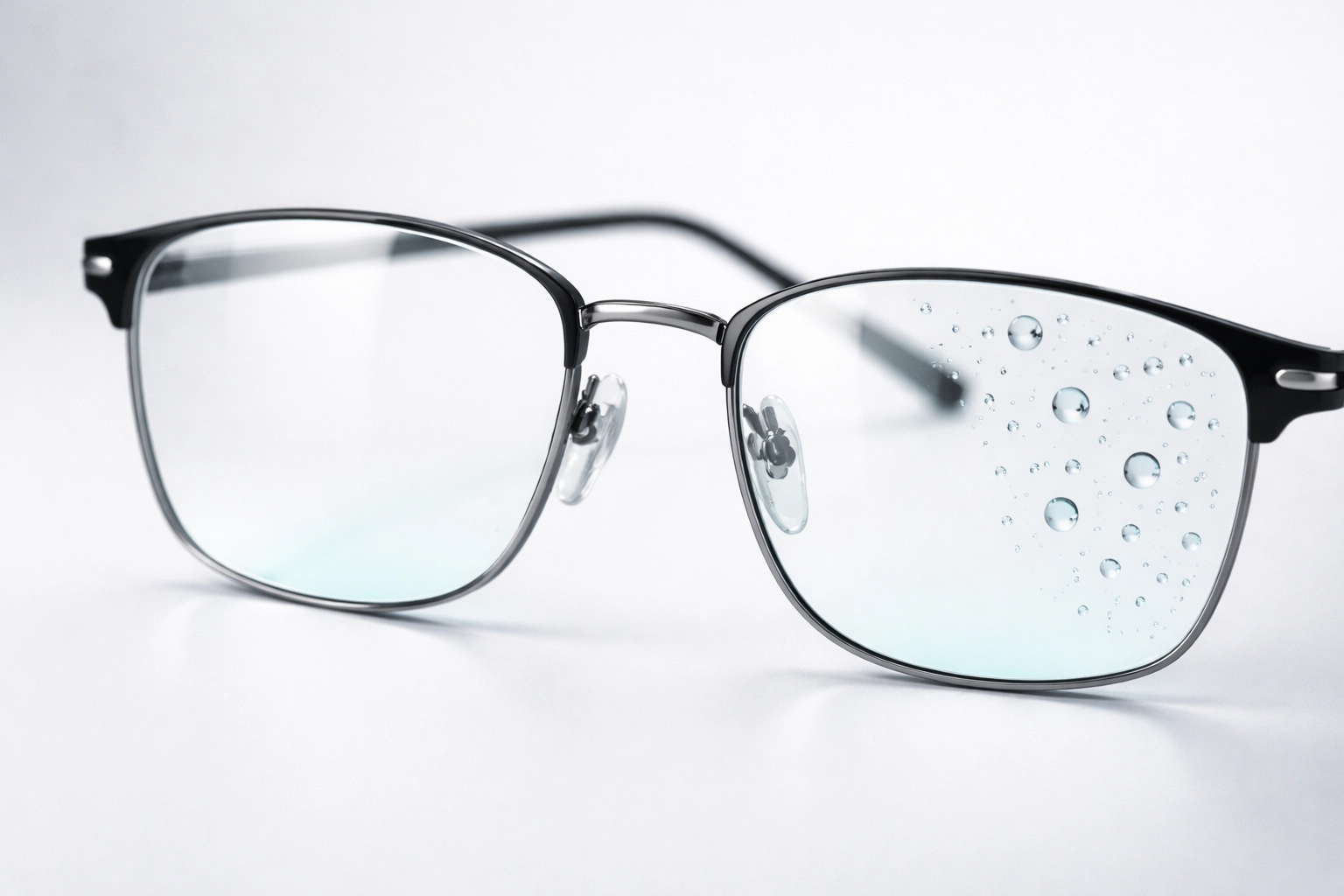
Hydrophobic and Oleophobic Properties: Translation? Water beads off, and fingerprints wipe away with minimal effort. No more constantly cleaning your lenses throughout the day.
-
Enhanced Aesthetics: Without reflections bouncing off your lenses, people actually see your eyes instead of glare. It's a subtle but real confidence boost, especially on video calls.
DO and DON'T: AR Coating Care
DO:
- Clean your lenses with a microfiber cloth and lens-specific cleaner
- Store your glasses in a protective case when not in use
- Rinse lenses under lukewarm water before wiping to remove debris
DON'T:
- DO NOT use paper towels, tissues, or your shirt, these can scratch the coating
- DO NOT use household cleaners like Windex, which can degrade the coating
- DO NOT leave your glasses in hot environments (like your car dashboard) as heat can damage coatings
For more on proper lens care, check out our guide on cleaning your glasses the right way.
HD Surfacing: Seeing in High Definition (Literally)
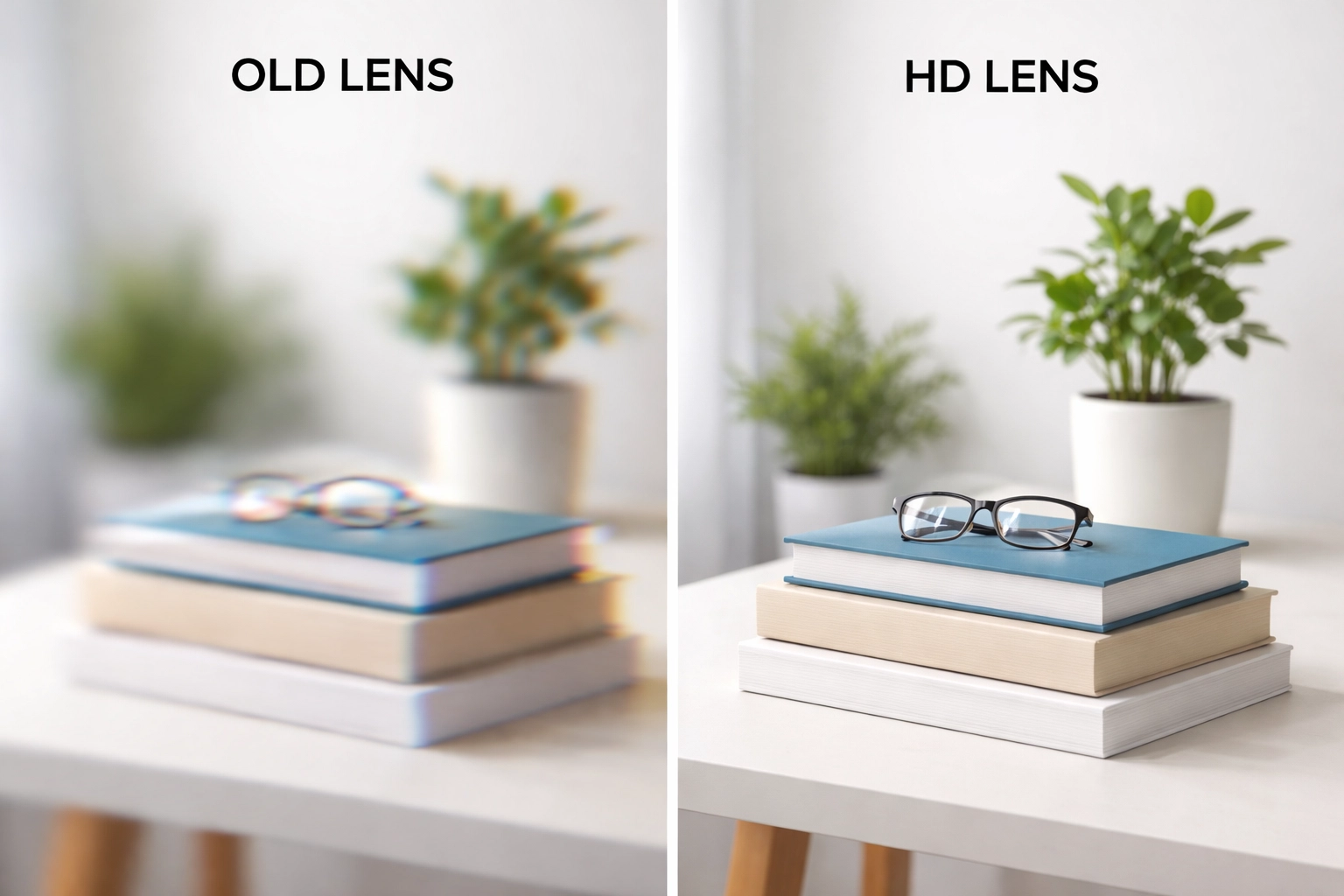
Here's where things get exciting. HD surfacing, also called digital surfacing or free-form technology, is the biggest leap forward in how prescription lenses are actually made.
The Old Way vs. The New Way
Traditional lenses are manufactured using standard curves and then fitted to your prescription. It works, but it's a bit like buying off-the-rack clothing, functional, but not tailored to you.
HD surfacing uses computer-controlled precision equipment to cut your lenses based on your exact prescription, frame measurements, and even how you wear your glasses (the angle, the distance from your eyes, etc.). The result is a lens that's essentially custom-built for your face.
According to the Vision Council, patients who switch to digitally surfaced lenses report:
- Sharper peripheral vision (no more "swim effect" when you look to the side)
- Better clarity in low-light conditions
- Reduced eye strain, especially during prolonged screen use
- Improved depth perception
Dr. Thomas Aller, OD, a clinical researcher specializing in optics, puts it this way: "HD surfacing allows us to correct optical aberrations that traditional lenses simply can't address. For patients, this translates to vision that feels more natural and less fatiguing."
Who Benefits Most from HD Lenses?
While anyone can appreciate the upgrade, HD surfacing makes the biggest difference for:
- Higher prescriptions: If you're above a +/-4.00, you'll notice significantly better edge-to-edge clarity
- Progressive lens wearers: Wider reading zones and smoother transitions between distances
- Monovision patients: Especially those experiencing eyestrain or fatigue, learn more about monovision solutions here
- Anyone who spends significant time on screens: The precision reduces the micro-adjustments your eyes make, lessening fatigue
Blue Light Protection: Still Relevant in 2026
You've probably heard about blue light blocking lenses by now. But are they still necessary?
Short answer: Yes, especially if screen time is a major part of your day.
Blue light: the high-energy visible light emitted by digital devices: has been linked to digital eye strain, disrupted sleep patterns, and long-term concerns about retinal health. While research continues to evolve, the practical benefits of blue light filtering are well-documented:
- Reduced eye fatigue during extended screen use
- Better sleep quality when wearing them in the evening
- More comfortable vision in artificially lit environments
The 2026 advancement? Blue light protection is now seamlessly integrated into lens materials and AR coatings: no more yellowish tint or color distortion. You get the protection without sacrificing visual clarity or aesthetics.
Photochromic Lenses: Smarter Than Ever
Remember transition lenses that took forever to clear up when you walked indoors? Those days are over.
Modern photochromic lenses feature significantly faster fade-back speeds, adapting to changing light conditions in a fraction of the time. They're also engineered to darken more effectively behind car windshields: a limitation that plagued earlier versions.
For anyone who moves between indoor and outdoor environments frequently (or just hates carrying two pairs of glasses), today's photochromic technology finally delivers on the promise of true all-in-one convenience.
The Sustainability Factor
Here's something worth noting: 30% of consumers now prefer eco-friendly, sustainable lens options, according to industry data. If environmental impact matters to you, ask about lenses made with recycled materials or sustainable manufacturing processes.
At spare-specs, we're committed to reducing our environmental footprint. Learn more about our climate commitment.

Making the Upgrade: What to Ask For
Ready to experience what modern lens technology can do? Here's your checklist when ordering your next pair:
- Premium anti-reflective coating with hydrophobic and oleophobic properties
- HD/digital surfacing for custom-fitted precision
- Blue light filtering integrated into the lens (not just a surface coating)
- Photochromic option if you want indoor/outdoor versatility
- High-index materials (1.67 or 1.74) if you have a strong prescription: thinner, lighter, more comfortable
The Bottom Line
Your eyeglasses shouldn't just help you see: they should help you live better. The technology exists to reduce eye strain, sharpen your vision, protect your eyes, and look great while doing it. The question is whether you're taking advantage of it.
It's 2026. Your lenses should feel like an upgrade, not an afterthought.
Have questions about which lens options are right for your prescription and lifestyle? Contact our team (we're here to help you see the difference).
Step into Spring with 25% off our newest frame selections. Code: SSPX25 at checkout.
Popular Posts

Popular Posts